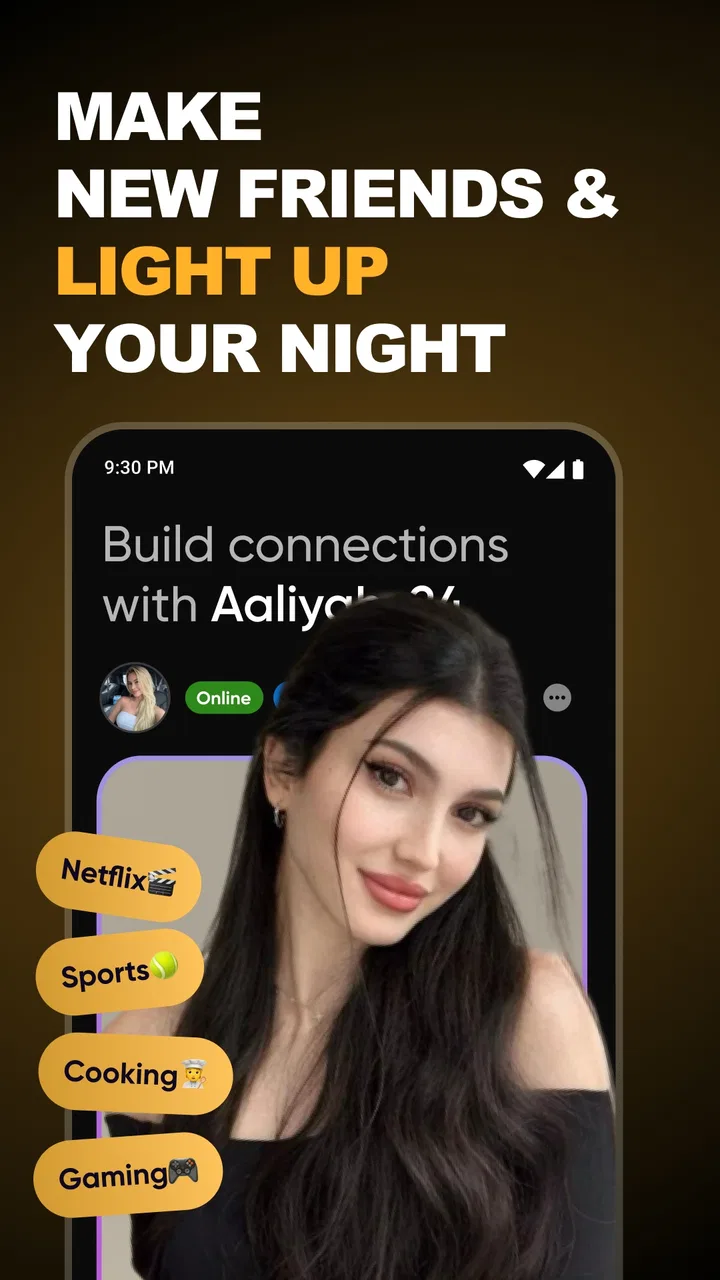
LitUp - Find Your Next Date
- 4.4
- Rating
- 500.00K
- Installs
- Free
- Price

 Analysis by App-foxy
I spent time with LitUp as a social dating app, and its central idea is easy to understand: help people start conversations with potential dates who are nearby. That local focus changes the way I think about matching. Instead of treating dating as an endless stream of distant profiles, the app is most useful when I want a connection that could realistically turn into a coffee, a walk, or a first meeting without a complicated travel plan.
LitUp is free to download, and CloudMind AI LLC presents it for a mature audience aged seventeen and over. It has built a sizeable audience, with more than 500 thousand installs, a 4.4 average from around 29 thousand ratings, and roughly 3 thousand reviews. Those figures suggest that the app has found a real place among people looking for a nearby date, although popularity alone does not guarantee that the people around you will be active or compatible.
Nearby dating is the feature that shapes the whole experience
The strongest part of LitUp is not simply that it belongs to the dating category. It is the way proximity becomes part of the decision-making process. When I use a dating app with nearby people in mind, I am judging a profile differently. I am not only asking whether I like someone’s photos or interests; I am also considering whether meeting them would fit naturally into my week.
You May Also Like

 Pandora - Music & Podcasts
Pandora’s Music Is Easy to Start, but Harder to Recover
Pandora’s strength is its low-effort path from a seed to a station. Its weak spot is how much confidence it asks you to place in connection, setup, and quiet recovery.

 8 Ball Pool
 Is Built on Rivalries, Rematches, and Routine
A close look at the rivalries, rematches, shared routines, and unanswered safety questions that turn a quick pool match into a persistent mobile community.

 Samsung Music
’s Quiet Strength Is Playing What You Already Own
Its reach comes less from spectacle than from dependable access to a personal library. That simplicity is both the app’s strongest retention engine and its ceiling.

 AccuWeather: Weather Radar
AccuWeather Review: A Quick, Clear Forecast for Everyday Decisions
For everyday plans, the best forecast is the one you can understand quickly. AccuWeather makes rain timing, radar, and local conditions easy to act on, with a few trade-offs.

 Hill Climb Racing
Why Hill Climb Racing Still Turns Crashes Into One More Run
A tiny car, a bumpy hill and one more upgrade: Hill Climb Racing keeps resurfacing because its simple chaos makes every near-miss feel personal.

 AliExpress - Shopping App
AliExpress Makes Global Shopping Feel Personal, but Shoppers Bear the Risk
AliExpress turns a global marketplace into a pocket-sized discovery engine. Its reach is useful, its shopping loop compelling, and its trade-offs easy to miss.
More From Our News Desk
View All News


That sounds like a small distinction, but it has a practical effect. A promising conversation can lose momentum when both people live too far apart. LitUp’s local angle makes the next step feel more concrete. If a chat develops well, arranging a first date is less likely to become a long discussion about distance, transport, or conflicting schedules.
I also found that this focus encourages more honest expectations. A person who wants a local relationship can treat location as an important filter rather than an afterthought. Someone who is open to casual conversation, spontaneous plans, or meeting people in the same area may also appreciate the immediacy. In my view, that is where the app has a clearer identity than a broad social platform that happens to include dating conversations.
Still, nearby does not automatically mean better. A smaller local pool can feel repetitive, especially in a less populated area or when I check the app at a quiet time. The value of the feature depends heavily on how many suitable people are using LitUp around me. It is a strength when local activity is healthy, but it can become a limitation when the available selection is narrow.
What chatting nearby changes in everyday use
My main advice is to treat location as a planning tool, not as proof of compatibility. A nearby profile may be convenient, but convenience should not replace a proper conversation. I would still look for clear communication, shared expectations, and a sensible approach to meeting. The app can reduce the distance between two people, but it cannot remove the need to decide whether meeting is actually a good idea.
A realistic example is a person with a busy workweek who does not want to maintain a long-distance connection. After work, they might have enough time for a short first date near home, but not for a trip across a region. In that situation, LitUp’s local emphasis is useful because it supports a manageable next step. The best outcome is not necessarily a dramatic romance; it may simply be turning a promising chat into a practical, low-pressure meeting.
Another useful scenario is someone new to an area who wants to meet people without relying entirely on existing social circles. LitUp can make the search feel more direct than waiting for an introduction through friends. I would approach it with patience, though. A local result is only a starting point, and a new resident may need time to understand which conversations feel genuine and which ones are not worth continuing.
How I would use LitUp without wasting time
I would begin by deciding what “nearby” needs to mean for my own routine. If I am willing to travel across town, my options may feel broader. If I only want to meet within a short distance, I should expect a smaller pool and avoid judging the app too quickly after one short session. That simple decision helps prevent a common mistake: blaming the app for a mismatch between the chosen area and the number of people available there.
Once a conversation begins, I would avoid treating the chat as an interview. The purpose is to see whether communication feels comfortable enough to justify a next step. Short, specific questions work better than sending a long list of personal details. I would also pay attention to whether the other person responds to what I actually say. Nearby dating only becomes useful when the conversation has enough substance to support a safe, realistic plan.
One non-obvious advantage of a local-first workflow is that it can help me identify practical compatibility early. If I prefer quiet evenings, public places, or short meetings during the week, those details matter more when the app is oriented toward people I might actually meet. I can discuss availability and preferred meeting style before investing days in a chat that would never work in real life.
I would also keep the first meeting deliberately simple. A public place with an easy exit is better than an elaborate plan built around a conversation that is still new. LitUp’s role ends at helping people connect; it should not encourage me to skip ordinary judgment. I would tell a friend where I am going, arrange my own transport, and leave if the situation feels uncomfortable.
That approach may sound cautious, but it is especially important for a dating service aimed at mature users. The age rating is seventeen and over, so the audience is not limited to adults in the same life stage. I would therefore be clear about age, expectations, and boundaries before meeting anyone. The app can facilitate contact, but personal safety and consent remain my responsibility.
A better workflow for profiles and conversations
I would use LitUp in short, purposeful sessions rather than constantly checking it. First, I would review nearby profiles and select only people who seem genuinely compatible. Next, I would start conversations with something specific instead of relying on a vague greeting. Finally, I would decide after a reasonable exchange whether the conversation deserves a meeting, a longer chat, or an immediate end.
This workflow matters because local dating can create a false sense of urgency. When someone is close by, it is tempting to move quickly simply because meeting seems easy. I think the better trade-off is to use the app’s convenience to arrange a realistic date, not to rush emotional trust. A nearby person still needs to earn confidence through consistent behavior.
I would also avoid sending the same message to everyone. A local app works best when the conversation feels connected to the person rather than to their distance. Mentioning a shared interest or asking about something visible in the profile gives the other person a reason to respond and helps me identify whether they can hold a natural conversation.
The situation where LitUp makes the most sense
For me, LitUp is at its best when I want to meet someone within my normal routine. Imagine finishing work on a weekday and having one free evening. A nearby dating app can make it possible to talk with someone who is also in the area and potentially arrange a short first date without turning the evening into a major project.
The same applies to people who prefer in-person chemistry over endless messaging. Some users find it difficult to judge compatibility through a profile alone. LitUp’s local orientation can shorten the gap between an initial chat and a real conversation, provided both people are comfortable and the meeting is planned sensibly.
It may also suit people who are tired of matching with users who are technically available but practically unreachable. On many broad dating services, distance can be one of the first problems discovered after a good conversation. LitUp makes that concern more visible from the start, which can save time for users whose priority is a relationship in their own area.
However, I would not call it the ideal choice for everyone. If I live somewhere with limited local activity, a larger dating platform may offer more variety. If I am specifically looking for long-distance relationships, travel connections, or a very specialized community, an app built around broader discovery may fit better. LitUp’s strength is also its boundary: it is most relevant when nearby dating is the goal.
Why the local angle can improve the first date
Distance affects more than transport. It influences how often two people can meet, whether a spontaneous plan is possible, and how much effort is required to maintain interest after the first date. When those practical questions are addressed early, I can focus more on whether the connection feels enjoyable and respectful.
There is also a psychological benefit. A first date near familiar surroundings can feel less intimidating than meeting someone after a long journey. I can choose a public location I already understand and leave without being stranded far from home. That does not make every meeting safe, but it gives me more control over the setting.
The trade-off is that local dating can make privacy feel more important. If many users come from the same area, I would be careful about sharing identifying details too early. I would keep the first conversation inside the app until trust develops, avoid revealing my exact home or work location, and be cautious with anyone who pressures me to move faster than I want.
The compromises behind a free dating app
LitUp is free, which lowers the barrier to trying it. That is helpful if I want to see whether the nearby dating pool suits me before committing money. It also makes the app approachable for casual users who are curious about local conversations but are not ready to pay for a dating service.
The business model includes in-app purchases ranging from $3.99 to $99.99 per item. I would keep that in mind before spending. Paid options can be tempting when I want faster results, but I would first evaluate the quality of conversations and the level of activity in my area. Paying cannot create compatibility, and it may not solve a quiet local pool.
That price range also makes it important to understand my own usage habits. Someone who opens the app occasionally may have little reason to buy anything. A frequent user who sees clear value in optional extras might reach a different conclusion, but I would set a personal limit rather than making repeated purchases out of frustration.
Another trade-off is the maturity rating. A seventeen-and-over audience means I should not assume that every user has the same dating goals, level of independence, or expectations about meeting. Clear communication becomes essential. I would ask what the other person is looking for before interpreting a friendly chat as romantic interest.
The current version is 1.1.2, and the app supports devices running Android 6.0 or later. That broad operating-system requirement makes it accessible to people using older Android phones, although the experience can still vary depending on the device and local network conditions. I would keep the app updated when possible, particularly for a service where messaging reliability matters.
How it compares with the usual dating alternatives
Compared with a large, general-purpose dating app, LitUp feels more focused on the practical question of who I can meet nearby. A larger service may be better when I want the broadest possible selection or more established discovery tools. LitUp is more appealing when distance is one of my main filters and I do not want to spend time sorting through people who live too far away.
Compared with meeting people through social networks, LitUp has a clearer dating purpose. That can make intentions easier to read, but it may also feel less casual. On a general social platform, conversation can grow from shared communities or interests. In LitUp, I would expect the dating context to be visible sooner, which is useful for direct users but less comfortable for people who prefer a slow, indirect approach.
Compared with offline introductions, the app provides more initial choice but less built-in accountability. A friend may know something about a person they introduce; an app connection begins with limited context. I would therefore value LitUp for discovery, not as a replacement for judgment, references, or gradual trust.
The most important comparison is not which app has the most features. It is which service matches my reason for dating. If I want nearby, attainable meetings, LitUp has a sensible angle. If I want a huge pool, niche matching, or a community organized around a specific interest, another option may be more efficient.
Who gets the most from this app
LitUp is a good fit for people who want to chat with potential dates in their area and who are prepared to turn a good conversation into a realistic plan. It particularly suits busy users, recent arrivals to a city, and anyone who sees distance as a major obstacle in online dating.
I also think it can work well for people who prefer direct communication. The app’s purpose is easy to understand, so I do not need to pretend that I am using it for an unrelated social activity. That clarity can reduce mixed signals, as long as I am equally clear about whether I want a serious relationship, casual dating, or simply conversation.
On the other hand, I would skip it if my local area has very few potential matches, if I strongly prefer anonymous browsing, or if I am uncomfortable with the possibility of meeting people from nearby circles. I would also choose a different service if my priority is a specialized dating community rather than location.
My final view is positive but measured. LitUp is most valuable when nearby dating is a real requirement, not merely a nice extra. It makes the path from chat to first date more practical, and its free entry point makes experimenting easy. I would use it with a clear location range, realistic expectations, careful boundaries, and a firm spending limit. For the right local audience, that combination makes it worth trying; for everyone else, a broader alternative may offer a better chance of finding the kind of connection they actually want.
FAQs for LitUp - Find Your Next Date
01What is LitUp - Find Your Next Date?
LitUp - Find Your Next Date is a dating app designed to help people discover potential matches, start conversations, and arrange dates. The experience generally centers on creating a personal profile, viewing other users, and showing interest in people who match your preferences. Before downloading, review the app’s current description, supported regions, and age requirements, since available features may vary by location and platform.
02How does matching and messaging work on LitUp?
After setting up your profile, you can typically browse or discover other members and indicate whether you are interested. Depending on the app’s matching system, messaging may become available only after mutual interest, helping reduce unwanted contact. Users should complete their profiles honestly, use respectful language, and remember that match visibility, chat options, and daily interaction limits may depend on account settings or subscription features.
03Is LitUp free to download and use?
LitUp may be available to download without an upfront charge, but some functions can require in-app purchases or a premium membership. Dating apps commonly place advanced filters, increased visibility, unlimited likes, or additional communication tools behind paid plans. Check the app store listing and subscription screen carefully before confirming payment, including renewal terms, trial periods, cancellation instructions, and whether prices differ between Android and iOS.
04Is LitUp safe for meeting people online?
LitUp can provide tools for meeting new people, but no dating app can guarantee that every profile or conversation is genuine. Avoid sharing your home address, financial information, passwords, or private documents. Keep early conversations inside the app, watch for requests for money or suspicious links, and report or block concerning accounts. If you meet someone, choose a public place and tell a trusted person about your plans.
05What information is needed to create a LitUp profile?
The registration process may request basic details such as your name or display name, age, location, photos, interests, and dating preferences. Some information may be used to personalize recommendations and improve matching. Use accurate details while avoiding unnecessary sensitive information in your public profile. Before signing up, read the privacy policy to understand how profile data, photos, location information, and messages may be collected or shared.
Pros
- Simple profile setup makes it quick to start meeting people.
- Discovery tools help narrow matches by shared interests and preferences.
- Clean interface keeps browsing profiles easy to understand.
- In-app messaging lets matches connect without sharing contact details.
- Useful for users seeking a dating app with a modern
- social feel.
Cons
- The quality of matches may depend heavily on your local user base.
- Some features may require a paid subscription or in-app purchases.
- New users could receive limited matches until the profile gains activity.
- Dating apps can still expose users to inactive or misleading profiles.
- Privacy settings should be reviewed carefully before adding personal details.

LitUp - Find Your Next Date
Gallery